AI-Generated Musician Solomon Ray Tops Christian Charts, Igniting Debate in Gospel Community
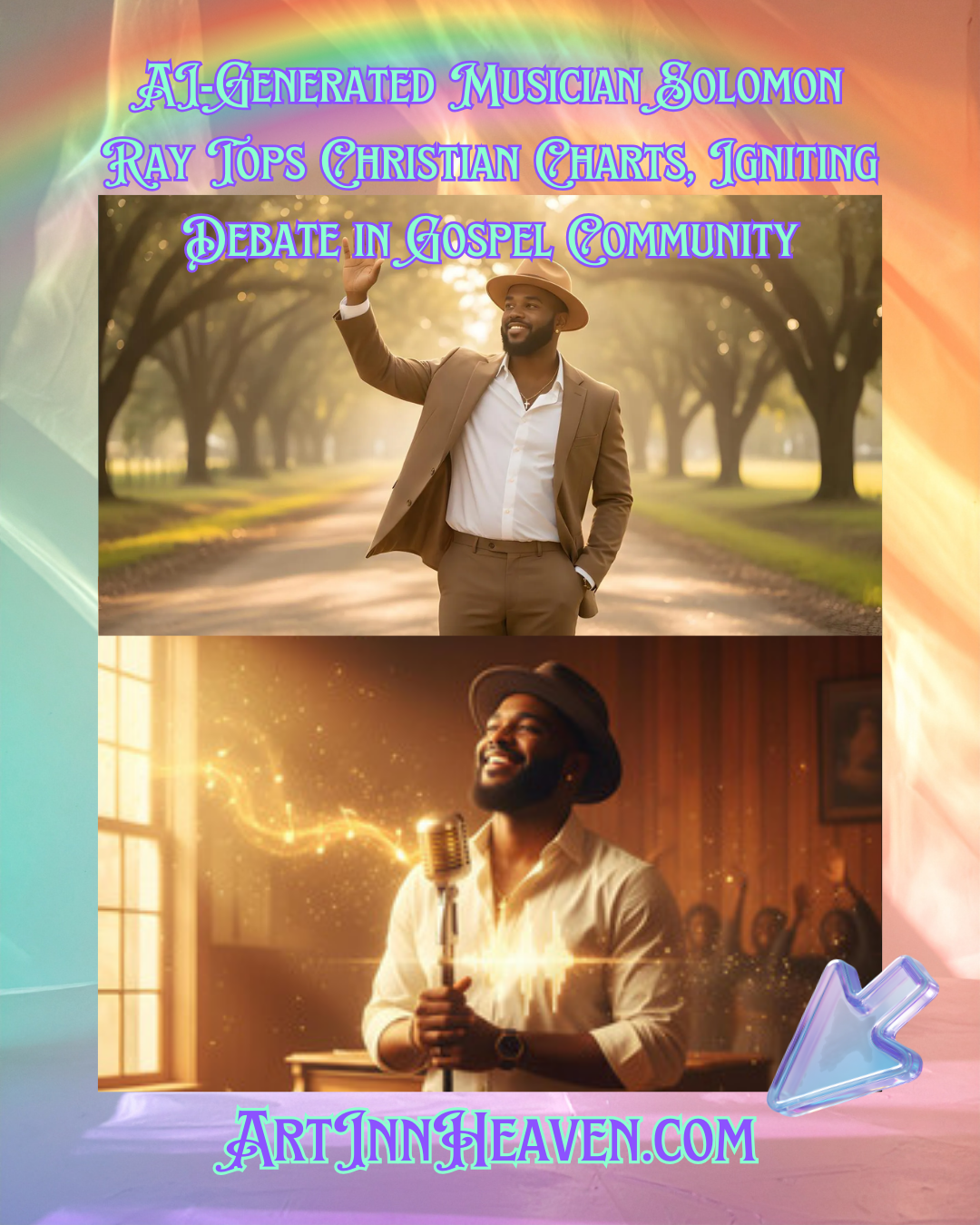
In a development capturing global attention across music and faith communities, an AI-generated musician known as Solomon Ray has reached the No. 1 spot on Christian and gospel music charts, drawing both fascination and controversy from fans, industry professionals, and worship leaders alike.
What began as a digital experiment has become a watershed moment in the intersection of technology and Christian art. Ray, described on streaming platforms as a soulful Mississippi-style gospel singer, has seen multiple tracks lead the iTunes Christian Songs and Billboard Gospel Digital Song Sales charts — a first for any artist not rooted in human performance.
Behind this unprecedented rise is Christopher “Topher” Townsend, a Mississippi-based musician who has used cutting-edge AI tools to generate Ray’s voice, lyrics, and musical arrangements. According to streaming service profiles, Ray’s debut single “Find Your Rest” and its parent EP Faithful Soul have drawn hundreds of thousands of monthly listeners, propelling the AI artist to the top of genre charts within weeks of release.
Tech Triumph or Spiritual Question?
The news has sparked a broad conversation about authenticity, creativity, and the spiritual integrity of music born from artificial intelligence. Some of the most vocal critics have come from within the Christian music scene itself. Dove Award–winning artist Forrest Frank publicly questioned the implications of Ray’s success, emphasizing that “AI does not have the Holy Spirit inside of it” and suggesting that listeners consider what they want from worship music.
“The question we should ask is not just can AI do this,” Frank stated in an Instagram message, “but should it — especially when the art is meant for spiritual connection.”
Others have echoed these concerns online, arguing that music meant to uplift and connect believers relies on human testimony and lived experience, which cannot be replicated through algorithms alone.
Proponents See New Creative Tools, Not Threats
Supporters of the AI approach, including Townsend himself, have defended Ray’s chart success as a creative evolution rather than a threat to traditional artistry. Townsend has characterized AI as another musical tool — akin to the electric guitar or digital synthesizer — that can help spread messages of hope more widely. “I’m just being an instrument,” he said in response to criticism, “and I don’t know why that should matter.”
On social media, Ray’s official channels have echoed this view, emphasizing that the message of the music — rather than the method of creation — should be at the forefront of listeners’ minds.
Broader Industry Implications
The Solomon Ray phenomenon arrives amid a larger surge in generative AI artists across genres, prompting streaming services, industry groups, and creators to rethink how digital works are classified, monetized, and credited. Some music platforms and rights organizations are already exploring ways to label AI-generated content explicitly to avoid misleading listeners and preserve artist royalties.
As debates continue, Ray’s chart performance stands as a historic milestone — and a sign of how rapidly the boundaries of music, technology, and culture are shifting. Whether this moment will lead to lasting change in Christian and gospel music, or serve as a flashpoint in ongoing artistic and theological debates, remains an open question.
